Optimizing Water Use in Agriculture with Smart Irrigation Telemetry and Automation
Water is one of the most critical resources for farming. Yet, many agricultural operations still struggle with inefficient water use. Overwatering wastes a precious resource, harms crop health, and increases costs. Conversely, underwatering can reduce yields and damage soil quality. Smart irrigation telemetry offers a practical solution to these challenges by enabling remote agricultural water optimization through automated, wireless water flow tracking. This technology helps farmers maximize crop yields while eliminating unnecessary water waste.
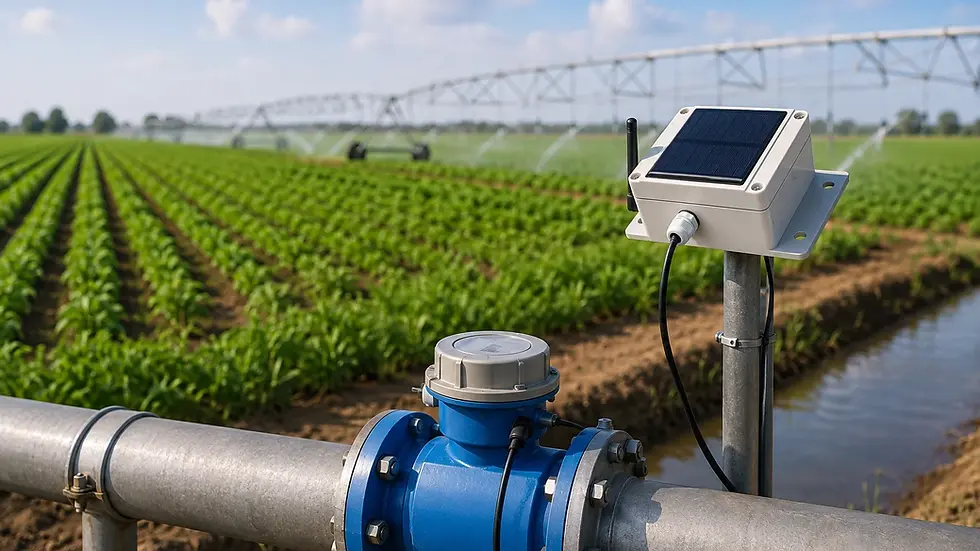
Understanding Smart Irrigation Telemetry
Smart irrigation telemetry uses wireless sensors and communication networks to monitor water flow and soil moisture in real time. These sensors are installed across irrigation systems, collecting data on water usage, pressure, and distribution patterns. The data is transmitted remotely to a central platform where it is analyzed to provide actionable insights.
Farmers can access this information via smartphones or computers. This allows them to adjust irrigation schedules and volumes based on actual field conditions rather than fixed routines. This approach reduces water waste by ensuring crops receive the right amount of water at the right time.
Benefits of Remote Agricultural Water Optimization
Implementing smart irrigation telemetry brings several advantages to large-scale farming:
Water savings: Automated monitoring detects leaks, overuse, or blockages early, preventing water loss.
Improved crop health: Precise irrigation supports optimal soil moisture levels, reducing stress on plants.
Labor efficiency: Remote control and alerts reduce the need for manual checks and adjustments.
Cost reduction: Lower water consumption and energy use translate into financial savings.
Environmental impact: Efficient water use helps conserve local water sources and reduces runoff pollution.
For example, a vineyard in California integrated smart irrigation telemetry and reported a 30% reduction in water use while maintaining grape quality. This shows how technology can support sustainable farming practices without sacrificing productivity.
Key Components of a Smart Irrigation Telemetry System
To implement remote agricultural water optimization effectively, farms need several components working together:
Wireless flow meters: Measure the volume of water passing through irrigation lines.
Soil moisture sensors: Track moisture levels at different depths to guide irrigation timing.
Data transmission units: Use cellular, radio, or satellite networks to send sensor data.
Central management software: Aggregates data, analyzes trends, and provides user-friendly dashboards.
Automated valves and controllers: Adjust water flow based on system recommendations without manual intervention.
Choosing the right combination depends on farm size, crop type, and local climate. Many providers offer modular solutions that can scale as needs evolve.
Practical Steps to Adopt Smart Irrigation Telemetry
Farmers interested in adopting this technology can follow these steps:
Assess current irrigation practices: Identify inefficiencies and areas where water use can be improved.
Select appropriate sensors and communication methods: Consider coverage area, connectivity options, and budget.
Install sensors strategically: Place flow meters at key points and soil sensors in representative field zones.
Set up data management tools: Use software that offers clear visualization and alerts.
Train farm staff: Ensure operators understand how to interpret data and respond to system recommendations.
Monitor and adjust: Regularly review data to fine-tune irrigation schedules and detect issues early.
Starting with a pilot area before full deployment can help farmers gain confidence and measure benefits.
Overcoming Challenges in Large-Scale Water Optimization
While smart irrigation telemetry offers clear benefits, some challenges exist:
Initial investment: Equipment and installation costs can be significant, but long-term savings often justify the expense.
Connectivity issues: Remote farms may face limited network coverage; satellite or long-range radio can help.
Data management: Handling large volumes of data requires reliable software and sometimes technical support.
Integration with existing systems: Compatibility with current irrigation infrastructure may require customization.
Farmers should work with trusted suppliers and consider government programs or grants that support water-saving technologies.
The Future of Agricultural Water Management
As climate variability increases and water resources become scarcer, the role of smart irrigation telemetry will grow. Advances in sensor technology, artificial intelligence, and cloud computing will enable even more precise and automated water management. Combining telemetry with weather forecasts and crop growth models will allow farmers to optimize irrigation dynamically, improving resilience and sustainability.
Adopting remote agricultural water optimization today prepares farms for tomorrow’s challenges while boosting productivity and reducing environmental impact.
Conclusion: Embracing Smart Irrigation Technology
In conclusion, smart irrigation telemetry represents a significant advancement in agricultural practices. By utilizing this technology, farmers can achieve efficient water management, enhance crop health, and reduce operational costs. The integration of smart irrigation solutions is not just a trend; it is a necessary step toward sustainable farming. As we face increasing environmental challenges, embracing these innovations will be crucial for the future of agriculture.
For more information on how to implement smart irrigation telemetry, visit M2M Solutions.

Comments